


 Table of Contents
1. Introduction
2. What Makes a Workflow “Complex”?
3. What Is Agentic AI Automation?
4. How Agentic AI Handles Complex Workflows
5. Real-World Business Use Cases
6. Agentic AI vs Traditional Workflow Automation
7. Key Benefits for Enterprises
8. How Advance Agility Helps Businesses Implement Agentic AI
9. Final Thoughts
Introduction
As organisations scale, their workflows become increasingly complex. These workflows often involve multiple systems, decision points, data sources, and human approvals. Traditional workflow automation struggles in such environments because it relies on fixed rules and predefined logic.
This is where agentic AI is transforming automation. Instead of following static instructions, agentic AI systems can plan, decide, act, and adapt autonomously-making them ideal for managing complex, dynamic business workflows.
What Makes a Workflow “Complex”?
Not all workflows are created equal. A workflow is considered complex when it includes:
-
Multiple decision points based on changing data
-
Dependencies across different tools and platforms
-
Human-in-the-loop approvals or exceptions
-
Unstructured inputs such as emails, documents, or chats
-
Continuous optimisation rather than one-time execution
Examples include end-to-end incident management, intelligent customer onboarding, financial reconciliation, or cross-team project coordination.
What Is Agentic AI Automation?
Agentic AI automation uses autonomous AI agents that can:
-
Understand goals rather than fixed instructions
-
Break goals into tasks
-
Decide the best sequence of actions
-
Interact with tools, APIs, and humans
-
Learn from outcomes and adjust behaviour
Unlike traditional automation, agentic AI does not require every scenario to be pre-defined.
How Agentic AI Handles Complex Workflows
Agentic AI manages complexity through four core capabilities:
|
Capability |
Description |
|---|---|
|
Goal-driven planning |
AI agents work towards outcomes, not just steps |
|
Context awareness |
Decisions are made using real-time data and history |
|
Adaptive execution |
Workflows adjust dynamically when conditions change |
|
Continuous learning |
Agents improve performance over time |
This makes agentic AI suitable for workflows that evolve, scale, and change frequently.
Real-World Business Use Cases
Businesses across industries are already using agentic AI to automate complex workflows:
IT Operations
• Incident triage and root-cause analysis
• Autonomous ticket routing and resolution
• Infrastructure monitoring with proactive remediation
Customer Service
• Multi-step issue resolution across systems
• Intelligent escalation handling
• Personalised responses using contextual data
Finance & Compliance
• Invoice matching and exception handling
• Fraud detection with adaptive rules
• Regulatory reporting automation
Operations & Supply Chain
• Demand forecasting and inventory optimisation
• Vendor coordination and exception management
• Workflow orchestration across ERP systems
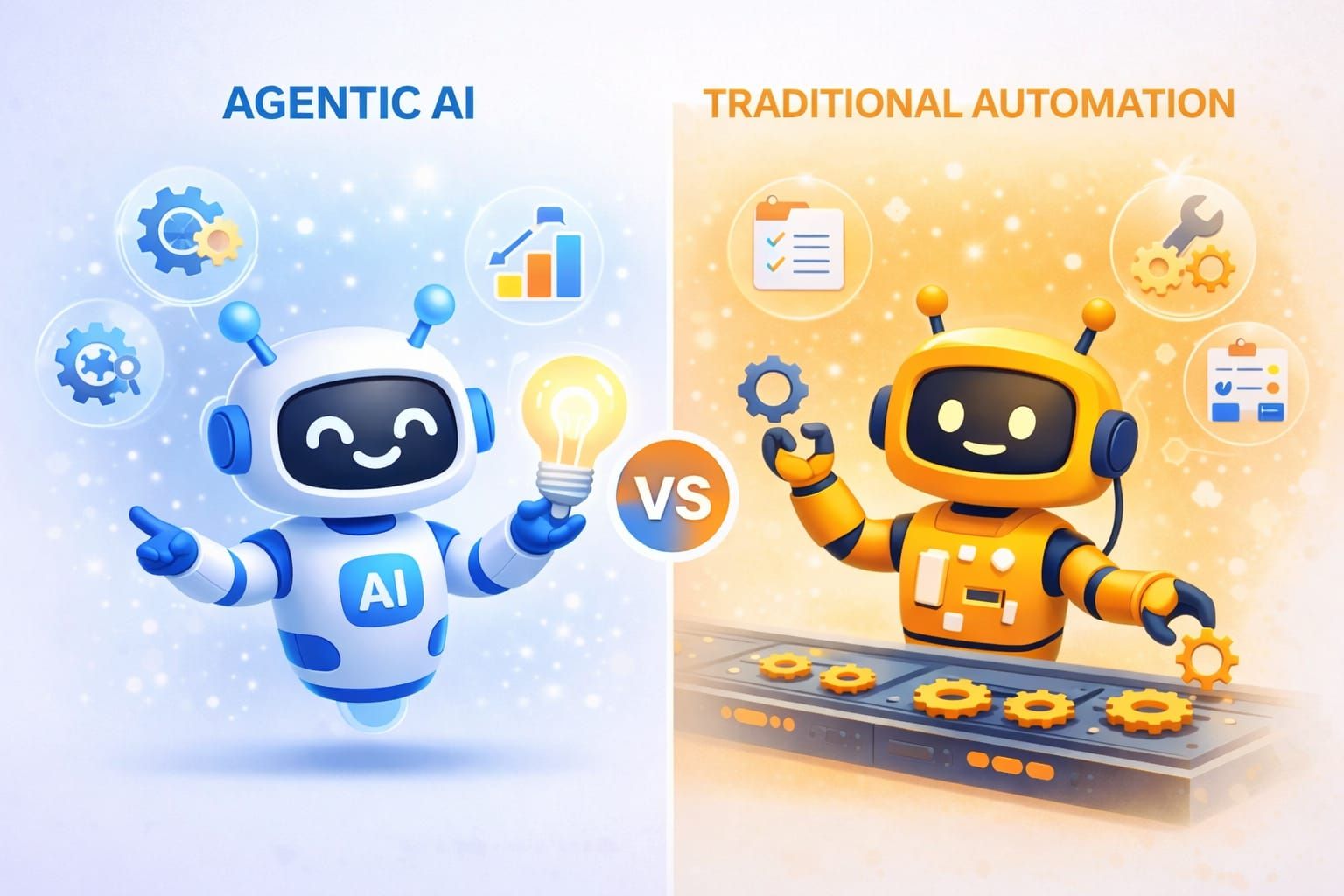
Agentic AI vs Traditional Workflow Automation
|
Aspect |
Traditional Workflow Automation |
Agentic AI Automation |
|---|---|---|
|
Logic |
Rule-based |
Goal-based |
|
Flexibility |
Low |
High |
|
Adaptability |
Manual updates required |
Self-adjusting |
|
Handling exceptions |
Limited |
Intelligent |
|
Scalability |
Complex to maintain |
Naturally scalable |
This comparison highlights why businesses are moving toward agentic AI for complex automation needs.
Key Benefits for Enterprises
Adopting agentic AI for workflow automation delivers measurable benefits:
-
Reduced operational overhead
-
Faster decision-making
-
Higher automation coverage
-
Improved customer experience
-
Greater resilience to change
Most importantly, businesses gain automation systems that think, not just execute.
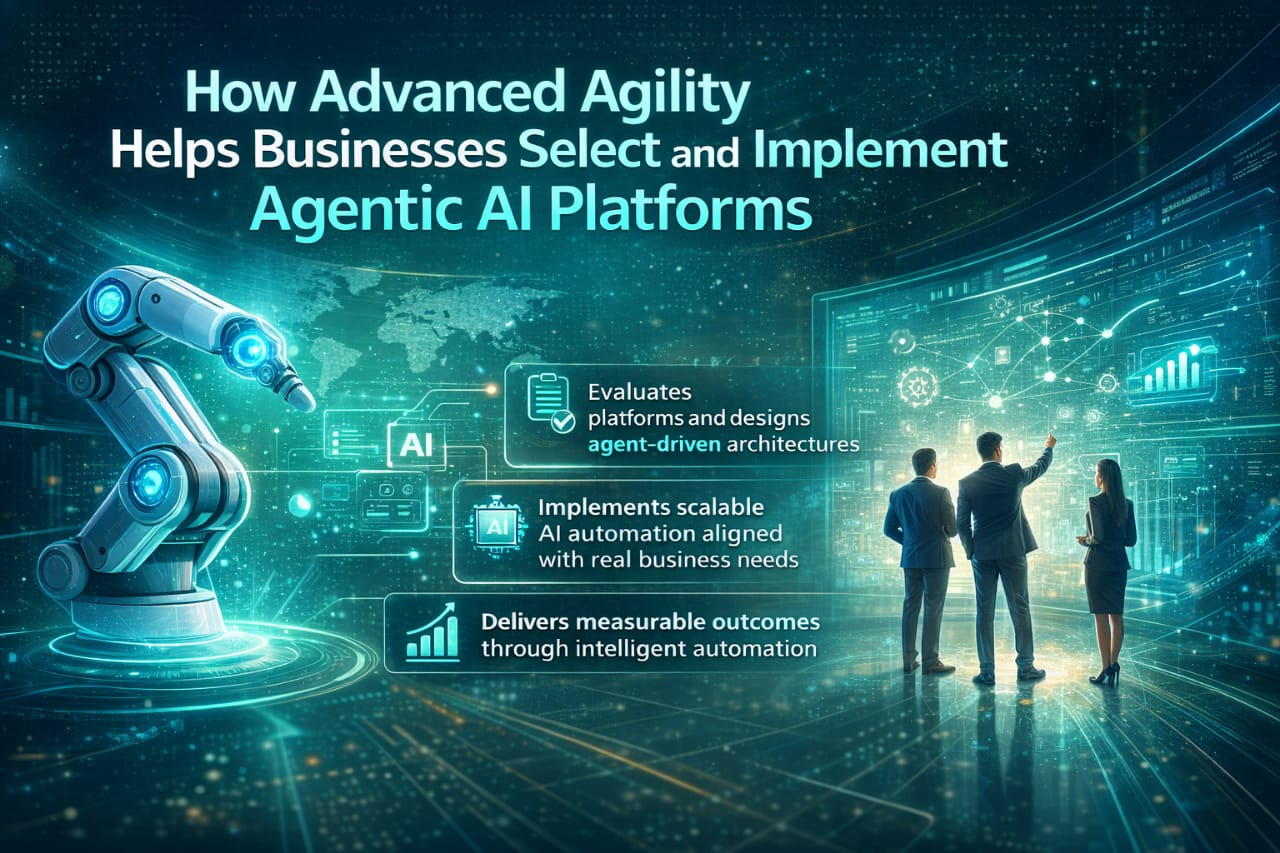
How Advance Agility Helps Businesses Implement Agentic AI
Advance Agility supports organisations at every stage of their agentic AI journey, including:
-
Identifying high-impact automation opportunities
-
Designing agent-based workflow architectures
-
Integrating AI agents with existing systems
-
Training teams on AI-enabled ways of working
-
Ensuring governance, security, and scalability
Our approach focuses on practical, enterprise-ready implementations, not experimental prototypes.
Final Thoughts
Agentic AI is redefining how businesses automate complex workflows. By moving beyond rigid rules and embracing autonomous decision-making, organisations can achieve smarter, more resilient operations.
As complexity continues to grow, agentic AI will become a foundational capability for future-ready enterprises.

view Count
1224