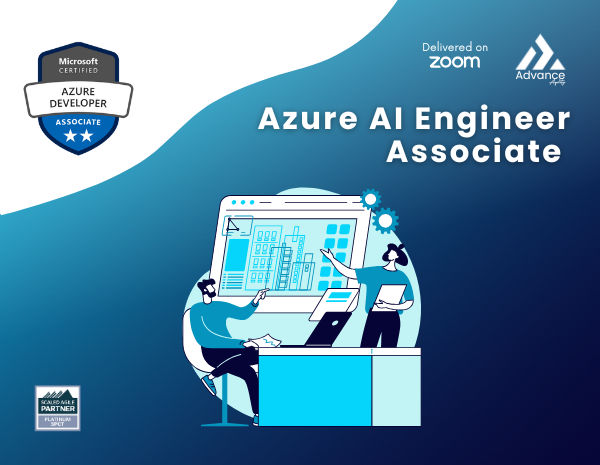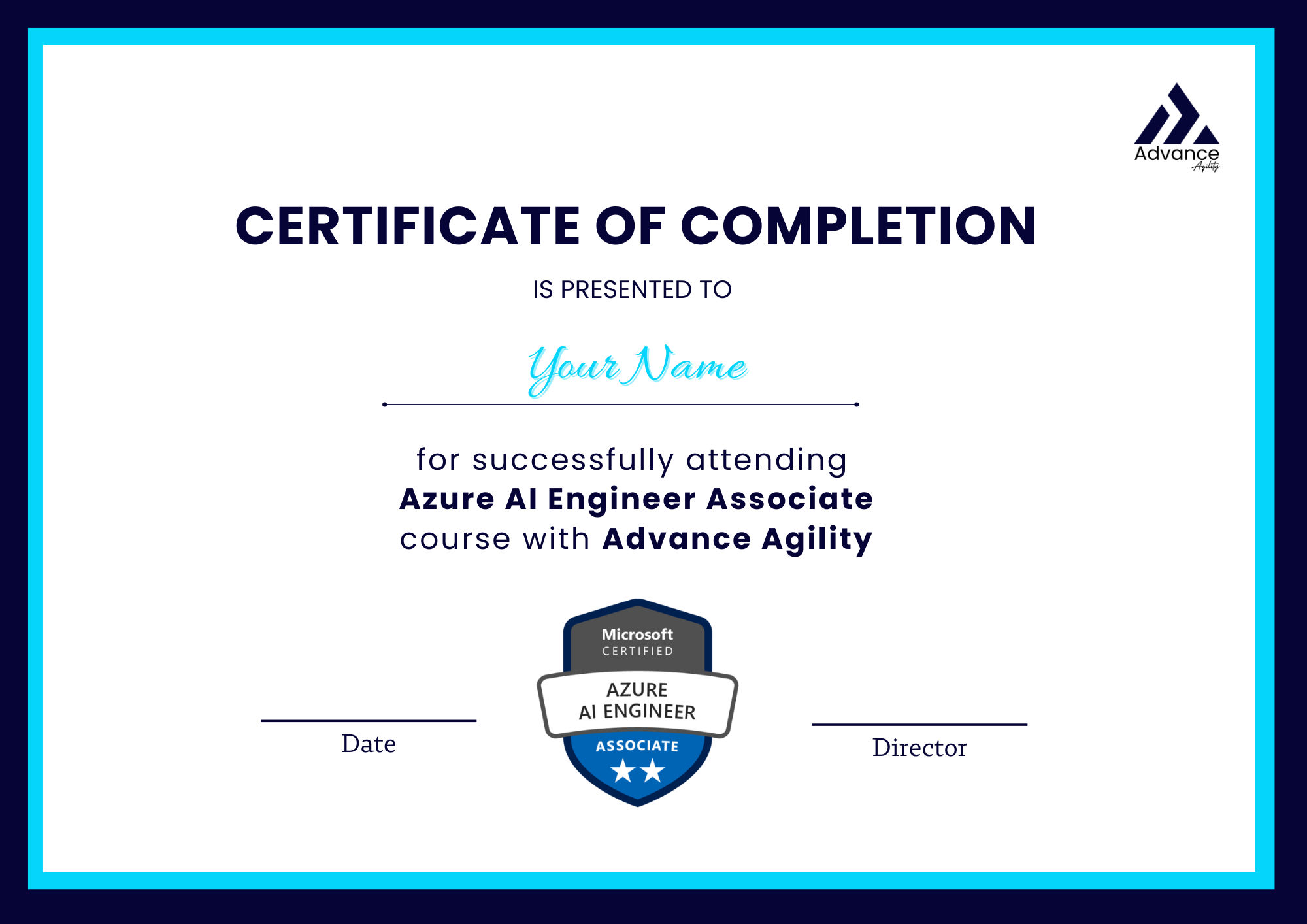
The AI-102T00: Designing and Implementing a Microsoft Azure AI Solution course offers in-depth training on building and managing AI solutions with Azure. It covers essential Azure AI services, including Azure Machine Learning, Azure Cognitive Services,
Date
20 Apr - 23 Apr (Mon-Thu) ย ย ย ย ย ย ย ย ย ย
Time
10:00 AM - 6:00 PM (EDT)
$850
18% OFF
$700
Trusted by organizations worldwide for professional development. Advance Agility connects clients with experienced trainers and global peers.
+
+
+
The AI-102T00: Designing and Implementing a Microsoft Azure AI Solution course provides comprehensive training on building, deploying, and managing AI solutions using Microsoft Azureโs AI services, including Cognitive Services, Machine Learning, and the Bot Framework.
โข Prepare to develop AI solutions on Azure
โข Define artificial intelligence
โข Understand AI-related terms
โข Understand considerations for AI Engineers
โข Understand considerations for responsible AI
โข Understand capabilities of Azure Machine Learning
โข Understand capabilities of Azure AI Services
โข Understand capabilities of Azure OpenAI Service
โข Understand capabilities of Azure AI Search
โข Create and consume Azure AI services
โข Create Azure AI services resources in an Azure subscription
โข Identify endpoints, keys, and locations required to consume an Azure AI services resource
โข Use a REST API and an SDK to consume Azure AI services
โข Secure Azure AI services
โข Consider authentication for Azure AI services
โข Manage network security for Azure AI services
โข Monitor Azure AI services
โข Monitor Azure AI services costs
โข Create alerts and view metrics for Azure AI services
โข Manage Azure AI services diagnostic logging
โข Deploy Azure AI services in containers
โข Create containers for reuse
โข Deploy to a container and secure a container
โข Consume Azure AI services from a container
โข Analyze images
โข Provision an Azure AI Vision resource
โข Analyze an image
โข Generate a smart-cropped thumbnail
โข Image classification with custom Azure AI Vision models
โข Create a custom Azure AI Vision classification model
โข Understand image classification
โข Understand object detection
โข Train an image classifier in Vision Studio
โข Detect, analyze, and recognize faces
โข Identify options for face detection, analysis, and identification
โข Understand considerations for face analysis
โข Detect faces with the Computer Vision service
โข Understand capabilities of the Face service
โข Compare and match detected faces
โข Implement facial recognition
โข Read Text in images and documents with the Azure AI Vision Service
โข Read text from images using OCR
โข Use the Azure AI Vision service Image Analysis with SDKs and the REST API
โข Develop an application that can read printed and handwritten text
โข Analyze video
โข Describe Azure Video Indexer capabilities
โข Extract custom insights
โข Use Azure Video Indexer widgets and APIs
โข Analyze text with Azure AI Language
โข Detect language from text
โข Analyze text sentiment
โข Extract key phrases, entities, and linked entities
โข Create question answering solutions with Azure AI Language
โข Understand question answering and how it compares to language understanding
โข Create, test, publish, and consume a knowledge base
โข Implement multi-turn conversation and active learning
โข Create a question answering bot to interact with using natural language
โข Build a conversational language understanding model
โข Provision Azure resources for Azure AI Language resource
โข Define intents, utterances, and entities
โข Use patterns to differentiate similar utterances
โข Use pre-built entity components
โข Train, test, publish, and review an Azure AI Language model
โข Create a custom text classification solution
โข Understand types of classification projects
โข Build a custom text classification project
โข Tag data, train, and deploy a model
โข Submit classification tasks from your own app
โข Custom named entity recognition
โข Understand tagging entities in extraction projects
โข Understand how to build entity recognition projects
โข Translate text with Azure AI Translator service
โข Provision a Translator resource
โข Understand language detection, translation, and transliteration
โข Specify translation options
โข Define custom translations
โข Create speech-enabled apps with Azure AI services
โข Provision an Azure resource for the Azure AI Speech service
โข Use the Azure AI Speech to text API to implement speech recognition
โข Use the Text to speech API to implement speech synthesis
โข Configure audio format and voices
โข Use Speech Synthesis Markup Language (SSML)
โข Translate speech with the Azure AI Speech service
โข Provision Azure resources for speech translation
โข Generate text translation from speech
โข Synthesize spoken translations
โข Create an Azure AI Search solution
โข Develop a search application
โข Create an Azure AI Search solution
โข Create a custom skill for Azure AI Search
โข Implement a custom skill for Azure AI Search
โข Integrate a custom skill into an Azure AI Search skillset
โข Create a knowledge store with Azure AI Search
โข Create a knowledge store from an Azure AI Search pipeline
โข View data in projections in a knowledge store
โข Enrich your data with Azure AI Language
โข Use Azure AI Language to enrich Azure AI Search indexes
โข Enrich an AI Search index with custom classes
โข Implement advanced search features in Azure AI Search
โข Improve the ranking of a document with term boosting
โข Improve the relevance of results by adding scoring profiles
โข Improve an index with analyzers and tokenized terms
โข Enhance an index to include multiple languages
โข Improve search experience by ordering results by distance from a given reference point
โข Build an Azure Machine Learning custom skill for Azure AI Search
โข Understand how to use a custom Azure Machine Learning skillset
โข Use Azure Machine Learning to enrich Azure AI Search indexes
โข Search data outside the Azure platform in Azure AI Search using Azure Data Factory
โข Use Azure Data Factory to copy data into an Azure AI Search Index
โข Use the Azure AI Search push API to add to an index from any external data source
โข Maintain an Azure AI Search solution
โข Use Language Studio to enrich Azure AI Search indexes
โข Enrich an AI Search index with custom classes
โข Perform search re-ranking with semantic ranking in Azure AI Search
โข Describe semantic ranking
โข Set up semantic ranking
โข Perform semantic ranking on an index
โข Perform vector search and retrieval in Azure AI Search
โข Describe vector search
โข Describe embeddings
โข Run vector search queries using the REST API
โข Plan an Azure AI Document Intelligence solution
โข Describe the components of an Azure AI Document Intelligence solution
โข Create and connect to Azure AI Document Intelligence resources in Azure
โข Choose whether to use a prebuilt, custom, or composed model
โข Plan an Azure AI Document Intelligence solution
โข Describe the components of an Azure AI Document Intelligence solution
โข Create and connect to Azure AI Document Intelligence resources in Azure
โข Choose whether to use a prebuilt, custom, or composed model
โข Use prebuilt Document intelligence models
โข Identify business problems that you can solve by using prebuilt models in Forms Analyzer
โข Analyze forms by using the General Document, Read, and Layout models
โข Analyze forms by using financial, ID, and tax prebuilt models
โข Extract data from forms with Azure Document intelligence
โข Identify how Document intelligence's layout service, prebuilt models, and custom models can automate processes
โข Use Document intelligence's capabilities with SDKs, REST API, and Document Intelligence Studio
โข Develop and test custom models
โข Create a composed Document intelligence model
โข Describe business problems that you would use custom models and composed models to solve
โข Train a custom model to obtain data from forms with unusual structures
โข Create a composed model that can analyze forms in multiple formats
โข Build a Document intelligence custom skill for Azure AI search
โข Describe how a custom skill can enrich content passed through an Azure AI Search pipeline
โข Build a custom skill that calls an Azure Forms Analyzer solution to obtain data from forms
โข Get started with Azure OpenAI Service
โข Create an Azure OpenAI Service resource and understand types of Azure OpenAI base models
โข Use the Azure AI Studio, console, or REST API to deploy a base model and test it in the Studio's playgrounds
โข Generate completions to prompts and begin to manage model parameters
โข Build natural language solutions with Azure OpenAI Service
โข Integrate Azure OpenAI into your application
โข Differentiate between different endpoints available to your application
โข Generate completions to prompts using the REST API and language specific SDKse
โข Apply prompt engineering with Azure OpenAI Service
โข Understand the concept of prompt engineering and its role in optimizing Azure OpenAI models' performance
โข Know how to design and optimize prompts to better utilize AI models
โข Include clear instructions, request output composition, and use contextual content to improve the quality of the model's responses
โข Generate code with Azure OpenAI Service
โข Use natural language prompts to write code
โข Build unit tests and understand complex code with AI models
โข Generate comments and documentation for existing code
โข Generate images with Azure OpenAI Service
โข Describe the capabilities of DALL-E in the Azure OpenAI service
โข Use the DALL-E playground in Azure AI Studio
โข Use the Azure OpenAI REST interface to integrate DALL-E image generation into your apps
โข Implement Retrieval Augmented Generation (RAG) with Azure OpenAI Service
โข Describe the capabilities of Azure OpenAI on your data
โข Configure Azure OpenAI to use your own data
โข Use Azure OpenAI API to generate responses based on your own data
โข Fundamentals of Responsible Generative AI
โข Describe an overall process for responsible generative AI solution development
โข Identify and prioritize potential harms relevant to a generative AI solution
โข Measure the presence of harms in a generative AI solution
โข Mitigate harms in a generative AI solution
โข Prepare to deploy and operate a generative AI solution responsibly
โข Lab Environment Setup
โข Enable Resource Providers
โข Get Started with Azure AI Services
โข Manage Azure AI Services Security
โข Monitor Azure AI Services
โข Use an Azure AI Services Container
โข Analyze Text
โข Translate Text
โข Recognize and Synthesize Speech
โข Translate Speech
โข Create a language understanding model with the Azure AI Language service
โข Create a Conversational Language Understanding Client Application
โข Create a Question Answering Solution
โข Create a Bot with the Bot Framework SDK
โข Create a Bot with Bot Framework Composer
โข Analyze Images with Azure AI Vision
โข Analyze Video with Video Analyzer
โข Classify Images with Azure AI Custom Vision
โข Detect Objects in Images with Custom Vision
โข Detect and Analyze Faces
โข Read Text in Images
โข Extract Data from Forms
โข Create an Azure AI Search solution
โข Create a Custom Skill for Azure AI Search
โข Create a Knowledge Store with Azure AI Search
Lean Business Leadership and AI Coach
Director of Agile Product Delivery & Transformation Coach
Business Agility and Transformation Coach
Get professional
guidance
from
learning
advisors
Upskill and reskill your team with our corporate training programs.
Reach UsAfter completing AI-102T00: Designing and Implementing a Microsoft Azure AI Solution, you can further enhance your skills by considering the following advanced courses:
โข AI-3016: Develop copilots with Azure AI Studio
โข AI+ Engineer
โข AI+ Developer
The AI-102 provides hands-on training with labs that help you use Azure Cognitive Search, Azure Cognitive Services, and Microsoft Bot Framework to develop applications that read, analyze, and process text in images and documents and even create conversational solutions with bots.
You will learn Azure AI services such as Azure Cognitive Services that cover Text Analytics, Translator, and Speech. You will also learn about QnA Maker Service, Azure Bot Service, Computer Vision Service, Language Understanding Service, and Recognizer Service.
You can take the AI-900T00: Microsoft Azure AI Fundamentals course before joining the AI-102 course.
The course covers various Azure Cognitive Services, including text analysis, speech recognition, image and video analysis, language understanding, and custom vision models.
Your team will gain in-depth knowledge of Azure Cognitive Services, Microsoft Bot Framework, and Azure Cognitive Search, enabling them to develop advanced AI solutions that can improve business processes and enhance customer experiences.
Earning a certification in Azure Fundamentals depends on your strength in Azure basics and learning path toward other associate or expert-level certifications. However, validating that knowledge with a certificate will benefit you immensely in the future.
You must know either Python or C# before you take up the AI-102 course.
After completing the AI-102 certification course, you can pursue various career opportunities such as AI Engineer, Data Scientist, and Solution Architect. This certification enhances your profile for high-paying jobs in the AI field, particularly in roles focused on implementing AI solutions on Azure.
Answer 4 quick questions. Get a personalized AI recommendation + an exclusive discount in 60 seconds.